Wondering what your car trade-in is worth? Learn exactly how dealers calculate trade-in value, the tax savings most people miss, and when selling privately makes more sense.
What determines the trade-in value of my car?
When you're ready to upgrade your vehicle, one question comes up immediately: What is my car worth as a trade-in? It's tempting to browse online listings and assume your car matches the retail prices you see — but there's a significant gap between retail value and trade-in value, and understanding that gap could save you thousands of dollars.
Here's exactly how dealers determine your trade-in offer, and how to decide whether trading in or selling privately is the right move for you.
1. Condition matters more than year and mileage
Two cars can share the same year, make, model, and mileage — yet receive very different trade-in offers. Physical and mechanical condition is the single biggest factor dealers evaluate.
Dealers look at:
- Exterior: Scratches, dents, or rust
- Interior: Upholstery tears, stains, or smoke odors
- History: Prior accidents or insurance claims
A well-maintained, garage-kept vehicle will consistently command a higher trade-in price than one that's been driven hard and neglected. Before heading to the dealership, a simple detail and minor cosmetic fixes can meaningfully improve your offer.
2. Safety inspections and reconditioning costs reduce your offer
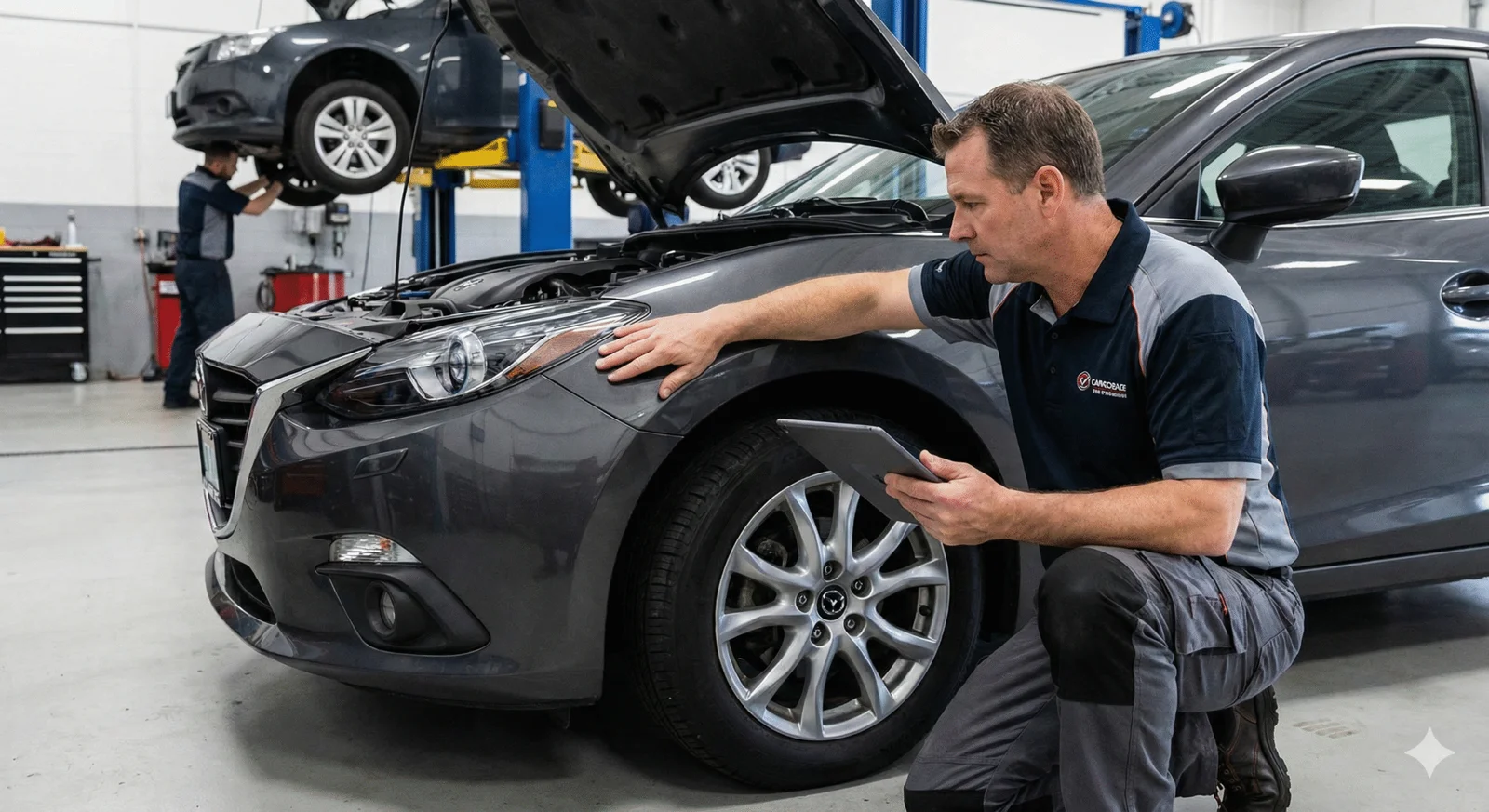
Here's something many sellers don't realize: a dealer can't simply accept your trade-in and put it straight on the lot. Every vehicle sold by a dealership must pass a mandatory Safety Inspection before it can be offered to the next buyer.
That means the dealer mentally deducts the anticipated cost of getting your car road-worthy the moment they evaluate it. Common reconditioning costs include:
- Tires — Low tread means a full replacement set
- Brakes — Worn pads or rotors must be replaced
- Fluid leaks — Oil or transmission leaks require repair
- Windshield — Cracks or chips often require full replacement
Example: If your car needs $2,000 in repairs to pass inspection, expect that amount to come off your trade-in offer. This isn't the dealer being unfair — it's a real cost they're absorbing.
3. The tax credit most people overlook
This is the most underrated advantage of trading in your car, and most sellers never factor it in.
When you trade in a vehicle, you only pay sales tax on the difference between the new car's price and your trade-in value — not on the full purchase price.
What this means practically: to genuinely beat a $20,000 trade-in offer through a private sale, you'd need to sell your car for $22,400 just to break even after taxes. That's a significant bar to clear.
4. Private sale: higher price, but more work
Selling privately will almost always yield a higher gross price than a dealer trade-in. But it comes with real trade-offs:
- No mandatory inspection — you can sell the car as-is
- More effort — listings, responding to inquiries, test drives, and vetting buyers
- Fraud risk — payment scams are common in private car sales
- Time — it can take weeks or months to find a serious buyer
For many people, the convenience and tax benefit of trading in outweigh the difference in headline price.
5. When selling privately actually makes more sense
There is one clear scenario where a private sale is usually the better financial choice: lower-value vehicles.
If your car is worth $3,000 or less, the math shifts significantly:
- Reconditioning costs may approach or exceed the car's value, resulting in a very low dealer offer
- The tax savings are minor — 12% of $3,000 is only $360
- A private buyer looking for a budget "as-is" vehicle will often pay closer to actual market value
In this case, the effort of a private sale is worth it.
Quick reference: trade-in vs. private sale
| Factor | Trade-in | Private sale |
|---|---|---|
| Convenience | High | Low |
| Tax savings | Significant | None |
| Sale price | Lower gross | Higher gross |
| Safety inspection | Dealer absorbs cost | Generally not required |
| Best for | Mid-to-high value vehicles | Low-value vehicles (<$3k) |
The bottom line
Understanding how dealers calculate trade-in value puts you in a much stronger negotiating position. Condition, reconditioning costs, and the often-forgotten tax credit all play a major role in what your car is actually worth at the dealership.
For most mid-to-high value vehicles, the tax savings alone can close the gap between a trade-in offer and a private sale price — making the convenience of trading in a genuinely smart financial decision, not just an easy one.
Ready to find out what your car is worth?